Antique & 19th Century Cameras
Antique & 19th Century Cameras
Key Events and Milestones
G.F.E. Pearsall. Brooklyn, NY.

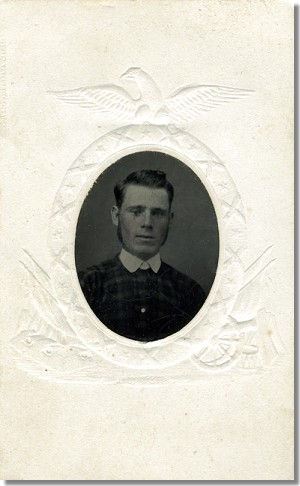
Refer to these Historic Camera website links for additional information about Frank and Alva.
Visit the Pearsall Compact Camera page
Visit the Glass Plate Negative with Pearsall Camera page
Visit the Pearsall Patents page
More ads can be found in the Ephemera page
Copyright ©2013 - 2026 by Rob Niederman - ALL RIGHTS RESERVED
Frank Pearsall, who later owned Howell's Brooklyn studio, was a "positionist" for photographer Jeremiah Gurney.
Frank's brother Alva was a camera operator for Mathew Brady in 1871.
Source: Anthony Bulletin Volume 23 (1892)

"Visitors to the fair of the American Institute, in the department of Art Photography, will find an admirable display of imperial card photographs, porcelain and ivory miniatures, and colored crayons from the gallery of G.F.E Pearsall, of this city. Some of the miniatures are finely executed, and a life size portrait of a young and beautiful girl, finished in colored crayons, is very attractive for the spirit shown in the pose of the figure and its delicacy of outline. Mr. Pearsall is the only exhibitor in the fine art department from Brooklyn, with the exception of a Mr. Senior, who contributes two or three crayon heads."
Source: Brooklyn Daily Eagle.
September 14, 1871
Alva b.1839
Frank b.1841

Velocipede Academy 1869
Source: Smithsonian Institution

1870-71 Frank opens his gallery; exhibits photography and crayon drawings.

Horace Greeley
1872 Portraits

Walt Whitman (Source: New York Public Library)

1874 Pearsall employees
Courtesy of Marcel Safier
1873 Portraits
• Gertrude Kellogg (actress)
• Roger A. Pryor (congressman, confederate general)
• Henry Ward Beecher & Wife (preacher, orator)
• Reverend Dr. Thomas De Witt Talmage

1880 Fulton Street gallery tradecard

1883 Frank patents his Compact Camera and starts agressively advertising.

The first reference of Frank's Compact Camera; March 10, 1883 advertisement by Seavey as an agent for the new camera one month before the patent was awarded.

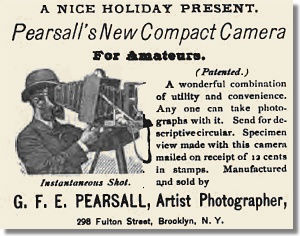
1883 advertisment for the New "Compact Camera" - Utility & Convenience. The illustration of a photographer peering into a rear bellows is represented in nearly all future advertisements.
1884 Frank's advertising grows with reviews and targets specific interests and markets.
1881 Pearsall advertises his “New Tadema Panels” with very odd, colorful caricature tradecards. A Tadema Panel is a specific style of photograph invented and sold by Frank Pearsall and is defined as having “one figure or more, seated in a richly decorated apartment, and mounted on a heavy gilt panel 7½ x 13½ inches.”




This 1884 'railroad men' advertisement is interesting because it could have been Frank's way of piggybacking onto the November 1883 institutionalization of Standard Time in time zones by U.S. and Canadian railroads to standardize their schedules. Prior to this significant event, most cities and towns used local solar time.

1885 This April reference by Frank advocates cost control of photographs through the creation of a "PhotoSyndicate" using coupons.
1891
Right: Pearsall endorses Gray's Extreme-angle Periscope Lens.
Far Right: To remain competitive with his brother Alva, Frank announces a portrait style called "Knarfograph" - which is Frank's name spelled backwards.


1890s to 1906(?) Over the years, Pearsall took pictures of Henry Chadwick (an important sports writer and creator of the box score) that appeared in the Spalding League Guide.
Image Source: New York Public Library digital archives

Later portrait of Frank Pearsall.
Image Source: New York Public Library digital archives